Humility · Oct 5, 2026 · 12 min read
The King Who Washed Feet
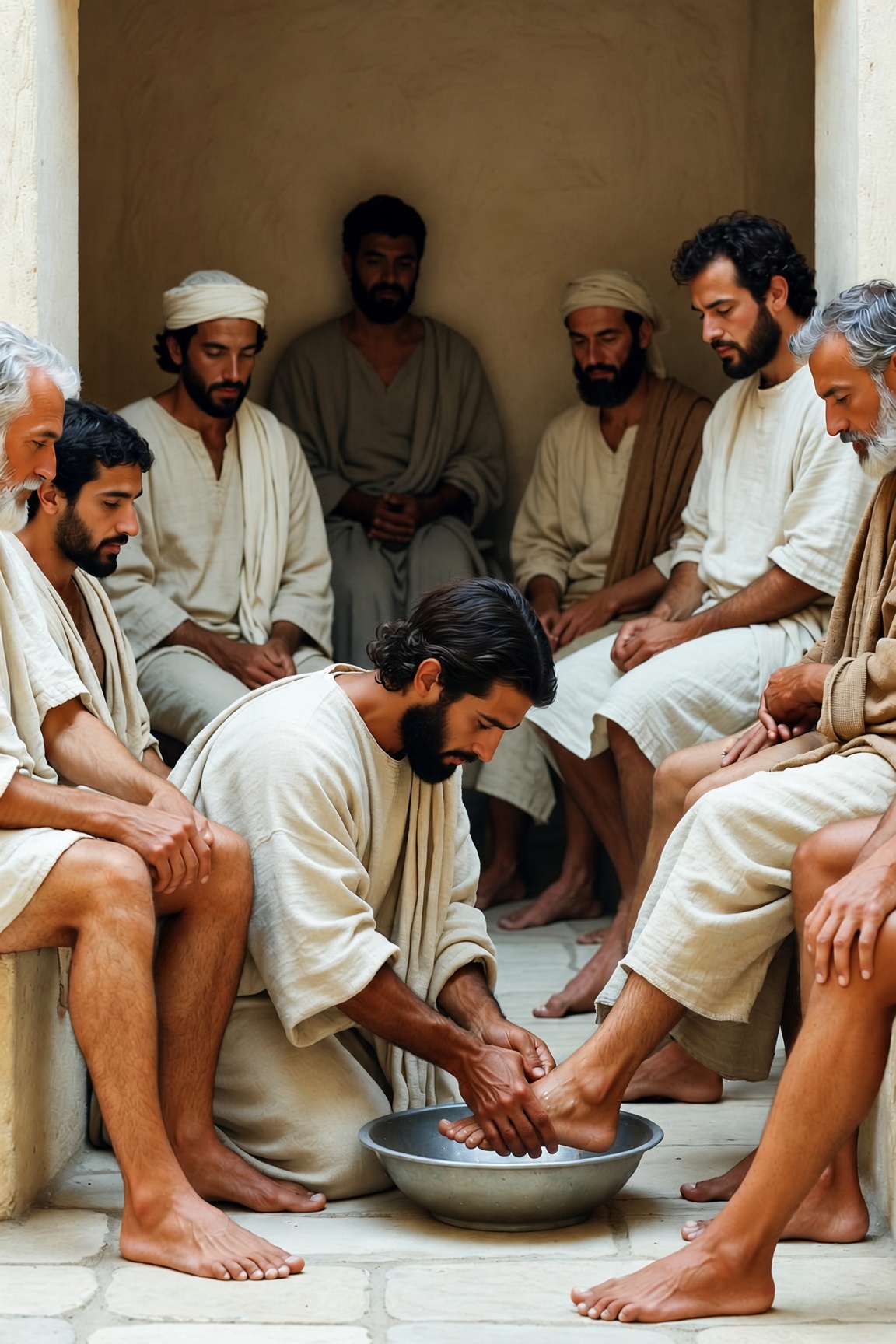
The King Who Washed Feet: What 24 Hours Left Reveals About Radical Humility, Grace, and Daily Living
"Jesus knew that the Father had given everything into his hands, that he had come from God, and that he was going back to God. So, he got up from supper, laid aside his outer clothing, took a towel, tied it around himself... and began to wash his disciples' feet." — John 13:3–5
If you received a definitive medical diagnosis today stating that you had exactly twenty-four hours left to live, what would you do with those final fourteen hundred and forty minutes?
For many of us, our immediate instincts would revolve around personal comfort or bucket-list desires. We might crave one last magnificent meal at our favorite restaurant, rush to book a quick trip to the beach or the mountains, or urgently call the people we love most to whisper final goodbyes.
When Jesus Christ faced His final twenty-four hours on earth, He was fully aware of the clock ticking toward Calvary. As the eternal Son of God who holds all things together by the word of His power and gives life and breath to all humanity, He possessed absolute authority over heaven and earth. Yet, gathered with His disciples in an upper room in downtown Jerusalem for the Passover meal, Jesus did not demand a throne, summon angelic legions, or ask to be served.
Instead, the King of kings stood up from the dinner table, stripped off His outer garments, wrapped a servant’s towel around His waist, poured water into a basin, and got down on His hands and knees to scrub the caked dirt and filth off the feet of His disciples.
This staggering act was far more than a lesson in basic etiquette or household manners. In a single moment, Jesus demonstrated the depth of divine love, gave us an enduring object lesson on how salvation works, and inverted the world’s definition of greatness forever.
1. Anchored in Sovereign, Perfect Love
To understand why Jesus took up the towel, we must look at the spiritual foundation beneath His actions. Humility without security is fragile, but Jesus acted out of absolute divine confidence and love. As John records in his Gospel account:
"Before the Passover festival, Jesus knew that his hour had come to depart from this world to the Father. Having loved his own who were in the world, he loved them to the end." — John 13:1
Throughout his Gospel, John declares clearly that Jesus is God incarnate, in whom those who believe receive eternal life. Notice what Jesus knew in that upper room: He knew He was returning to the Father. To return to the Father means He existed with the Father in eternity past—a clear affirmation of Christ’s divine pre-existence as the eternal Son of God. Furthermore, Jesus knew that the Father had handed all authority into His hands. He was not a helpless victim trapped by tragic circumstances; He was sovereignly in control of every detail leading to the cross.
Because Jesus knew precisely who He was, where He came from, and where He was going, He possessed no fragile ego to defend. His absolute security in the Father enabled His ultimate expression of humility.
John emphasizes that Jesus loved His disciples "to the end." In the original Greek text, the word used for end is teleios, which signifies completeness, perfection, and utter fulfillment. Jesus did not love His followers with a fickle or conditional affection. He loved them with the fullest measure of God's redemptive love—a love that surpasses human knowledge.
When life gets difficult, the enemy often whispers the lie that our flaws, bad attitudes, or past failures have disqualified us from God’s care. But Scripture reminds us that God's love does not depend on our performance or shifting feelings:
- Psalm 103:8, 10: The Lord is compassionate and gracious, slow to anger, and abounding in steadfast love; He does not treat us as our sins deserve.
- 1 John 3:1: See what great love the Father has lavished on us that we would be called children of God—and that is what we are!
- Romans 5:8: God proves His own love for us in that while we were still sinners, Christ died for us.
- Romans 8:38–39: Neither death nor life, nor angels nor demons, nor things present nor things to come, can separate us from the love of God in Christ Jesus our Lord.
When you feel unworthy, do not trust shifting emotions. We do not live by feelings; we live by faith in what is true according to God's revealed Word. You are loved with a perfect, eternal love that led Jesus straight to the basin—and ultimately to the cross.
2. Priesthood, Sacrifice, and the Servant's Garment
Before examining the conversation between Jesus and Peter, it is helpful to see the deep Old Testament imagery woven into this upper room scene:
The Imagery of Priesthood (Exodus 29): In Old Testament law, before Aaron and his sons could serve as priests, Moses had to wash them with water to cleanse and consecrate them. In John 13, Jesus—our Great High Priest—washes His disciples, consecrating them as a new priesthood under the New Covenant to go out and serve God's people. The Humility of the Suffering Servant (Isaiah 53 & Philippians 2)* When Jesus laid aside His outer garment, He provided a living picture of His incarnation. As Paul writes in Philippians 2, Christ emptied Himself by taking the form of a servant. The infinite became finite; the eternal Son laid behind His heavenly glory to be born into poverty, enter our broken world, and humble Himself unto death on a cross.
3. The Bath and the Basin: Understanding Salvation vs. Daily Cleansing
As Jesus moved around the table with His water basin, He came to Simon Peter. Shocked by the sight of His Lord performing the humiliating work of the lowest household slave, Peter protested: "Lord, are you going to wash my feet? You will never wash my feet!"
Jesus replied firmly: "If I don't wash you, Peter, you have no part with me."
Realizing that separation from Jesus was at stake, Peter impulsively swung to the opposite extreme: "Lord, not only my feet, but also my hands and my head!"
It was then that Jesus delivered a profound theological distinction that clarifies how salvation works:
"One who is bathed doesn't need to wash anything except his feet, but he is completely clean. You are clean..." — John 13:10
In this interchange, Jesus connects the physical act of foot-washing to a twofold spiritual reality: Justification and Sanctification.
In the original language of John 13:10, the phrase "one who has bathed" describes a completed action in the past that carries permanent, ongoing results. When you place your faith in Jesus Christ, you receive a full spiritual bath. Through His shed blood—which acts like the world's greatest laundry detergent—your guilt and shame are washed away completely. As the classic hymn declares, "There is a fountain filled with blood drawn from Emmanuel's veins, and sinners plunged beneath that flood lose all their guilty stains."
Paul emphasizes in Ephesians 1:7 that in Christ we have redemption through His blood, the forgiveness of sins according to the riches of His grace. Peter later affirmed in Acts 10 that everyone who believes in Jesus receives forgiveness through His name.
This full bath is your permanent legal standing before God. Whether you came to faith as a seven-year-old at Vacation Bible School, a fifty-seven-year-old on the side of the highway, or a seventy-seven-year-old in a worship center, the moment you cry out to Christ, God no longer sees your sin—He sees the perfect righteousness of His Son. You are justified once and for all. You never need to be "re-saved," "re-bathed," or re-baptized when you stumble.
The Daily Foot-Washing: Practical Righteousness (Sanctification)
However, as believers living in a fallen world, we still walk through dusty streets. Our flesh wages war against us, temptation touches us, and our feet get dirty with daily sin.
While daily sin never revokes your salvation or cancels your full bath, it does cover your feet in grime and hinder your personal fellowship with the Father. You do not need a brand-new bath; you simply need to bring your feet back to Jesus' basin for daily cleansing.
Consider this practical picture:
Imagine taking a thorough bath at home, drying off, putting on clean clothes, and then stepping outside into the yard in flip-flops. As you walk across the grass and sidewalk, dirt and dust inevitably cling to your feet. Do you need to get back into the bathtub and wash your entire body all over again? Of course not. You simply walk over to the garden hose on the side of the house, spray off your feet, and keep moving forward.
In the exact same way, when we sin as Christ-followers, we do not lose our salvation. But we go back to Jesus in prayer, confess our sins, and let Him wash our feet with His grace, restoring our joy and fellowship with God.
4. Towels Over Fists: Washing the Feet of Our Betrayers
Perhaps the most breathtaking detail in John 13 is found in verses 2 and 11: Jesus knew that Judas Iscariot had already agreed to betray Him.
Jesus was fully aware that Judas was going to sell Him out to the authorities for thirty pieces of silver. He knew Judas was turning a profit off His upcoming death. Yet, as Jesus moved around the circle of disciples in the upper room, He did not skip Judas. He unlaced Judas' sandals, cradled his dirty feet in His hands, washed off the road dust with water, and wiped them dry with His towel.
If Jesus humbled Himself to scrub the feet of the man who sold Him to be executed, how can we justify holding grudges or seeking revenge against those who hurt us?
When people betray, slander, or hurt us, our natural human impulse is to tighten our fists and prepare to strike back. But Jesus models a radically different path. Following Christ means laying down our clenched fists and picking up a servant's towel. It means responding to hostility not with anger, but with an open-handed posture eager to extend grace.
5. What Foot-Washing Looks Like on a Monday Morning
After Jesus finished washing the disciples' feet, He put His outer clothing back on, reclined at the table, and issued a direct mandate:
"If I, your Lord and Teacher, have washed your feet, you also ought to wash one another's feet. For I have given you an example that you also should do just as I have done for you. Truly, I tell you, a servant is not greater than his master... If you know these things, you are blessed if you do them."* — John 13:14–17
In the upside-down kingdom of God, true greatness is inverted: the way up is down, the first shall be last, and leadership is demonstrated through lower-level service. If the King of the universe washed dirty feet, then no task in our homes, workplaces, or churches is beneath us.
Here is how the towel and basin translate into everyday life:
In Marriage
- Husbands: Loving your wife as Christ loves the church means taking personal ownership of her needs. Ask her: "What is your least favorite chore?" and make it your personal mission to take it off her plate. In one marriage, the husband deeply hated doing laundry while his wife disliked doing dishes—so he gladly became "the dish man," taking joy in loading the dishwasher to serve his bride. Whether it is taking out the trash without being asked, changing dirty diapers, or cleaning toilets—no chore is beneath a husband who follows Jesus.
- Wives: Serving your husband involves honoring him in small, thoughtful ways. When he arrives home from a stressful day at work, give him a moment to catch his breath before bringing up household problems. Speaking respectfully about him both in private and in public builds his confidence and honors the Lord.
For Teenagers and Young People
- At Home: Practice rapid, cheerful obedience when your parents ask you to do something. Clean up after yourself, do chores without complaining, let your sibling choose the movie, or give away the last slice of cake. Choosing to put others first is a powerful witness of Christian maturity.
In the Workplace
- Bosses and Leaders: Ask the consistent question: "How can I serve you?" When your team wins, pass all the credit to them. When your team makes a mistake, step up and take the blame.
- Employees: Refuse to pour gasoline on office drama or gossip. Be a peacemaker who speaks truth in love. Clean out the breakroom coffee pot, take out the trash, or restock supplies without seeking accolades or celebration, knowing that you ultimately serve the Lord Christ.
---
6. The Executive in the Gutters: Remembering Our True Identity
A powerful real-world illustration of John 13 took place during a ministry partnership in Southeast Asia. A local leader named Pastor G shared the story of spending four months serving alongside Mother Teresa’s ministry.
While there, Pastor G observed a middle-aged German man quietly moving through the city's poorest gutters. This man would gently scoop up sick individuals covered in severe skin diseases and leprosy, carry them indoors, wash their raw skin, clean their infected feet, feed them warm meals, and dress them in clean clothes.
Pastor G approached the man and asked: "Who are you, and why are you doing this?"
The man quietly replied:
"Back home in Germany, I am the chief executive of a corporate business with eight thousand employees under my authority. But every single year, I take one full month of vacation time to come here and serve in these gutters—just to remind myself of who I really am."
In our spiritual condition apart from Christ, every single one of us was like a helpless outcast lying dirty in the dark. But Jesus came down into our mess, scooped us up in His arms, washed us clean in His blood, clothed us in His righteousness, and welcomed us to His table.
When we remember what Jesus did for us when we were at our worst, taking up a towel to serve someone else is no longer a burden—it becomes our highest joy.
---
Conclusion: Grab Your Towel
Imagine being in Peter’s shoes that night in the upper room. The water in the basin is still warm. The street dirt is gone, and your feet are clean. Jesus looks you in the eyes and says: "Now go and do the same."
The King who washed feet now commands us to wash feet.
We do not serve others to earn God's love; we serve because we have already been loved with an everlasting, perfect love. We do not extend grace to prove our own righteousness; we extend grace because our souls have been fully washed in the blood of the Lamb.
This week, as you walk into your home, your workplace, your school, or your community, look around for the dirty feet. Look for the unappreciated task, the tired spouse, the difficult coworker, or the enemy who doesn't deserve your kindness—and pick up your towel.
---
Reflection Questions for Group or Personal Study
- Rooted in Love: Jesus was able to serve humbly because He was completely secure in His identity and relationship with the Father (John 13:3). How does knowing your secure identity in Christ free you from needing recognition or approval from others?
- Bath vs. Basin: Why is it so vital to distinguish between the "full bath" of justification and the daily "foot-washing" of sanctification? How does this truth protect us from either despairing over daily stumbles or taking God's grace for granted?
- Washing Betrayers: Is there someone in your life who has hurt or betrayed you? What would it look like for you to move from a "white-knuckled fist" to an "open-handed towel" posture toward them this week?
- Practical Action: What is one concrete, practical way you can "wash the feet" of someone in your family, workplace, or church over the next 48 hours?
Comments
No comments yet.
Comments are closed.